
How to fix accounting workflow leaks before chasing AI in 2026
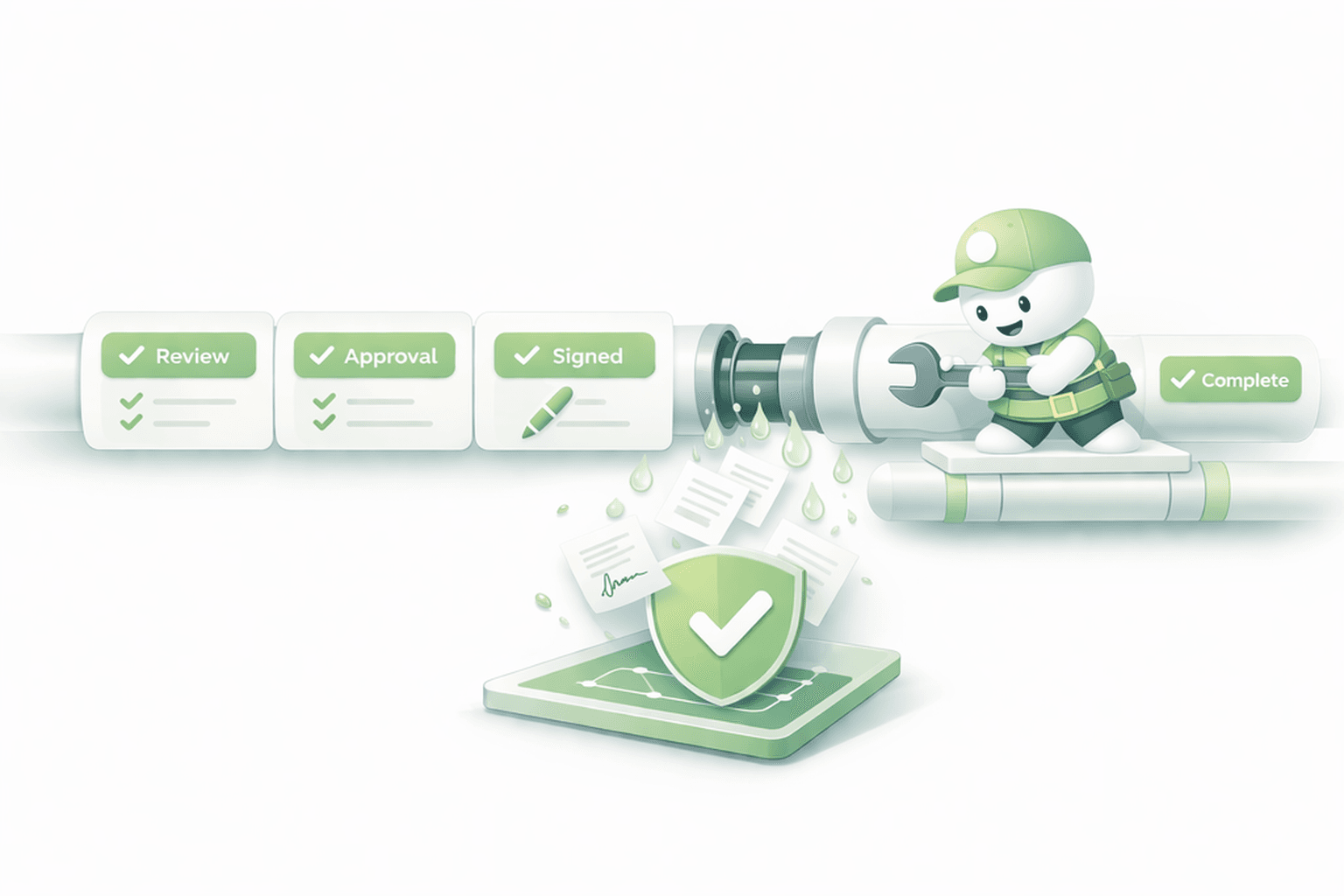
AI is dominating the conversation in accounting right now.
New tools. New features. New promises about how firms will operate in the future. But before any of that delivers value, there is a more practical question firms need to answer first: where is work still getting stuck today?
That was the core theme from FuseSign’s panel with Robin Johnson of TaxAssist Accountants Norwich North and Emma Reid of Cottons Group. The discussion stayed grounded in what is actually happening inside firms, not what might happen in the future.
Because AI will not fix a broken workflow. It will sit on top of it.
The real problem is not a lack of software
Most firms already have the tools they need.
Practice management. Accounts production. Tax. Document storage. Signing. Billing. The issue is not absence. It is how those systems work together, or more often, how they do not.
At Cottons Group, Emma described a setup where client data existed across multiple systems, creating duplication and unnecessary admin. Over time, this made the system harder to manage and introduced risk across the firm.
Robin approached the same problem from a different angle. His focus was on creating a central hub and making sure everything fed into it.
That approach removes the need to jump between systems or maintain multiple versions of the same data. It also creates a clearer structure for how work moves through the firm.
Because if a tool doesn’t integrate properly with the rest of the stack, it adds extra steps instead of removing them.
The workflow leaks holding firms back
Across the discussion, the same types of issues kept appearing:
Disconnected data
Multiple systems holding different versions of client information, requiring repeated updates.
Manual handoffs
Teams downloading, uploading or rekeying data because systems are not connected.
Broken billing processes
Separate workflows for completing work and issuing bills, leading to delays or missed revenue.
Inefficient onboarding
Paper-based or inconsistent onboarding processes that create confusion internally and friction for clients.
Document chasing and storage
Manual follow-ups for signatures, followed by additional steps to send and store final documents.
These are not edge cases. They are common across firms of all sizes.
And they all point to the same issue: the workflow itself is not designed to flow.
Why integrated workflows matter more than new tools
Both firms focused on improving how their existing systems worked together rather than constantly adding new software.
For Cottons, integrating systems reduced duplication and created a single, consistent data set across the firm.
That change alone removed a significant amount of admin and made processes easier to manage at scale.
For Robin, integration meant building a stack that was more intuitive and required less manual intervention. Information flows automatically, rather than being moved around by the team.
The outcome is simple. Fewer steps. Fewer errors. Faster turnaround.
And a more consistent experience for clients.
Where to start: fix one workflow first
One of the most practical takeaways from the panel was this: do not try to fix everything at once.
Robin started with onboarding. Previously, it involved paper forms and unclear next steps. By simplifying the process into structured stages, the workflow became clearer, faster and easier to manage.
Cottons took a different approach. Emma said the firm focused first on the account's workflow because it had the biggest impact on efficiency and capacity.
The principle is the same.
Start with the workflow that creates the most friction. Fix that first. Then build from there.
Adoption is the make-or-break
Technology alone does not improve a workflow. Adoption does.
Emma outlined how Cottons approached rollout using pilot groups across different teams. This allowed the firm to test changes, gather feedback and refine the process before wider implementation.
Communication was a key part of that process. Teams needed to understand why changes were being made, not just what was changing.
There was also a clear point around expectations.
That means workflows need to be redesigned alongside the technology, not simply layered on top of existing ways of working.
Without that, even the best tools will struggle to deliver value.
The role of quick wins in building momentum
While some changes take time, others can be implemented quickly and deliver immediate improvements.
The panel highlighted how small adjustments to workflows, particularly around document signing and automation, can remove friction for both teams and clients.
These quick wins matter because they are visible. Teams feel the difference straight away. Clients experience a smoother process.
And that builds confidence in the wider changes happening across the firm.
The smarter question for firms in 2026
Instead of asking, “Which AI tool should we implement next?”, firms should be asking something far more practical:
Where is our workflow breaking down today?
If the answer includes duplicated data, manual processes, delayed handoffs or inconsistent client journeys, that is where attention should go first.
For firms reviewing their accounting workflows today, fixing these foundational issues is often what drives the biggest improvements.
AI will still play a role. But only once the underlying systems are connected, structured and working as intended.
Final Word
If you want to go deeper into this, there are two ways to explore it further.
Watch the full panel discussion
See how Robin Johnson and Emma Reid are structuring their workflows, what they’ve changed, and what’s working in practice.
Download the guide: The 2026 ‘Anti-AI’ Accounting Tech Stack Blueprint (UK Edition)
A practical breakdown of common workflow leaks, how to fix them, and how to structure your stack so it actually works.