Identify the signer
The signing method should help identify who signed, using details like email, account information or authentication records.

Electronic signatures are widely used across Australia to approve contracts, client documents, engagement letters, financial statements, and many other business records.
This guide explains how electronic signatures work in Australia, what makes them legally valid, when you should exercise caution, and how accounting firms can use electronic signature software to streamline client approvals.
This article provides general information only and should not be considered legal advice.
Yes. Electronic signatures are generally recognised in Australia for many business transactions and Commonwealth processes.
The Electronic Transactions Act 1999 establishes that electronic signatures can satisfy many legal signing requirements, provided certain conditions are met. Similar legislation exists across Australia's states and territories, although some documents remain subject to additional rules or exceptions.
For most businesses, electronic signatures can be used for everyday agreements, client approvals and internal processes. However, the document itself, the parties involved and any industry-specific requirements should always be considered before relying on an electronic signature.
While every situation is different, an electronic signature generally needs to satisfy four key principles.
The signing method should help identify who signed, using details like email, account information or authentication records.
The signer should show they intended to approve or accept the document through a deliberate signing or approval step.
The method should suit the type of document being signed. Higher-risk documents may require stronger evidence.
In some cases, the receiving party must accept electronic signatures, especially government agencies, financial institutions or other third parties.
An electronic signature is any electronic method used to indicate approval or agreement.
This could include:
A digital signature generally refers to a more secure form of electronic signature that uses technologies such as encryption or digital certificates to help verify the signer and protect the integrity of the document.
For most Australian businesses, the important question isn't which term is used, but whether the signing process provides sufficient evidence for the document being signed.
To learn more, read:
A legal signature does not have to look like a traditional handwritten signature.
Depending on the situation, a signature may be handwritten, typed, drawn on a touchscreen, uploaded as an image, or applied through electronic signature software. What matters is whether the signature helps identify the signer and shows their intention to approve or be bound by the document.
When electronic signatures are used, it is also important to retain evidence of the signing process. Records showing when the document was signed, who signed it, and which version was approved can help support the validity of the signature if questions arise later.
Many everyday business documents can be signed electronically in Australia, although some document types require additional care.
|
Commonly suitable |
Check requirements carefully |
|---|---|
|
Engagement letters |
Deeds |
| Service agreements | Wills |
| Client authority forms | Powers of attorney |
| Financial statements |
Affidavits |
|
Onboarding documents |
Statutory declarations |
|
Internal approvals |
Documents requiring witnessing |
|
Compliance forms |
Certain government filings |
The suitability of electronic signatures depends on the applicable legislation, the document itself and the
organisation receiving it.
If you're unsure whether a particular document can be signed electronically, seek legal advice or confirm the relevant requirements before proceeding.
Accounting firms send hundreds of documents for approval every year, including engagement letters, tax documents, financial statements, onboarding packs and compliance forms.
Managing these documents manually often creates unnecessary administration through printing, scanning, emailing and chasing outstanding signatures.
Electronic signature software helps firms replace those manual processes with structured workflows that allow
teams to:
Rather than simply collecting signatures, firms gain greater visibility over the entire document approval process.
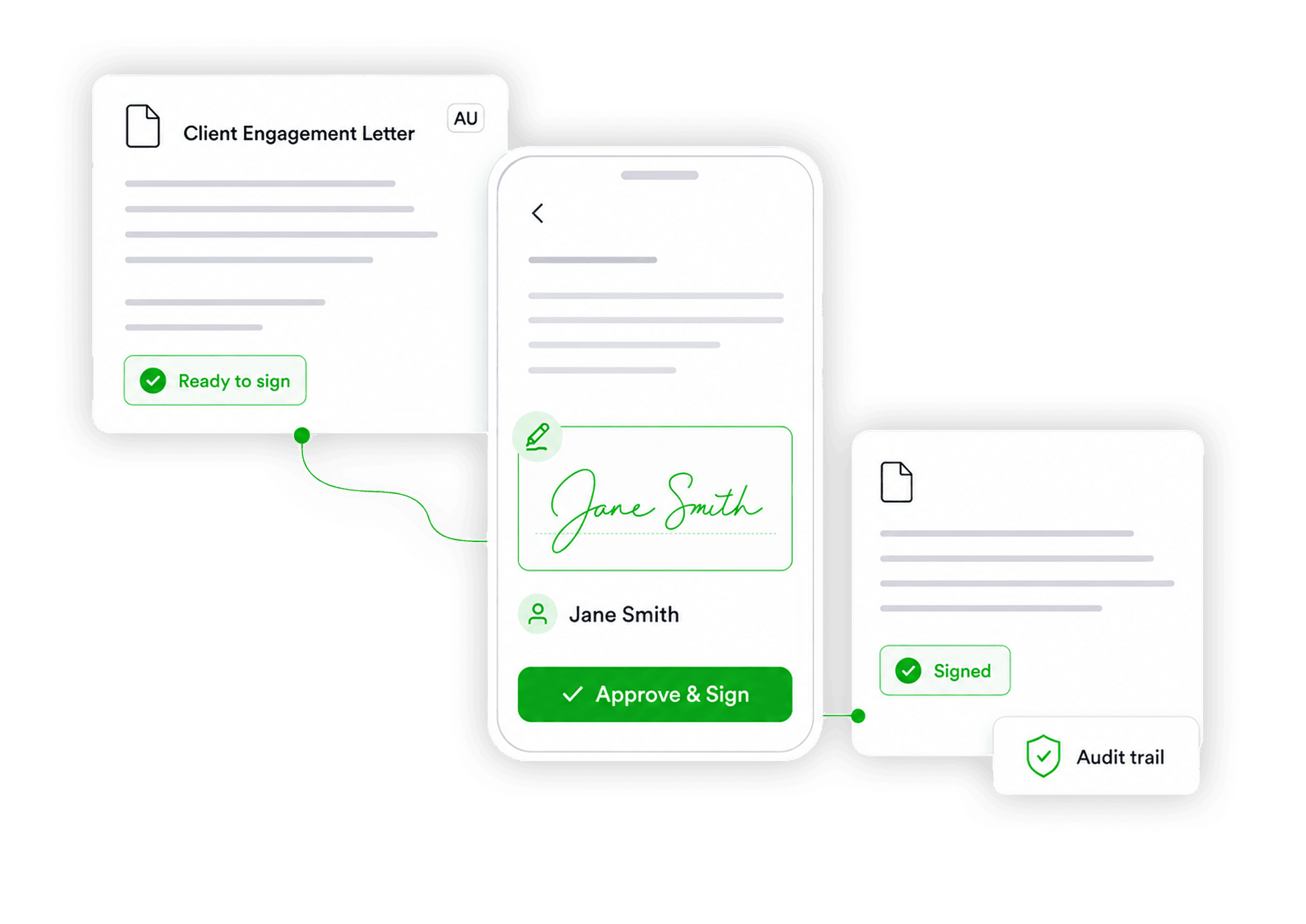
FuseSign is designed specifically for accounting and bookkeeping firms that regularly send client documents for approval.
Using FuseSign, firms can:
Instead of relying on email chains and manually returned PDFs, firms can manage client signatures through a single workflow that improves visibility for both staff and clients.
See why thousands of Australian businesses trust FuseSign to reduce admin, speed up turnaround and deliver a better client experience.