Identify the signer
The signing method should help identify who signed, using details like email, account information or authentication records.

Electronic signatures are widely used across the UK to approve contracts, engagement letters, tax documents, client authorisations, financial statements, and other business records.
This guide explains how electronic signatures work in the UK, what UK eIDAS means, when stronger signature evidence may be needed, and how accounting firms can use electronic signature software to manage client approvals more efficiently.
This article provides general information only and should not be considered legal advice.
Jump to the section you need.
Yes. Electronic signatures are generally recognised in the UK.
In most cases, an electronic signature can be used as an alternative to a handwritten signature, including where a document has a statutory signature requirement. The Law Commission has confirmed that electronic signatures can be used to execute documents, provided the person signing intends to authenticate the document and any required formalities are satisfied.
However, the right process depends on the document, the evidence needed, and any specific legal, regulatory, industry, or recipient requirements that apply.
For accounting firms, that means a simple electronic approval may be suitable for some workflows, while others may require stronger evidence around identity, authorisation, document integrity, and audit history.
It is based on Regulation (EU) 910/2014, which was adopted into UK law after Brexit and amended for the UK. In practical terms, UK eIDAS helps define different levels of electronic signature and sets rules for trust service providers. The three common signature levels are:
Most everyday business workflows do not automatically require the highest level of signature. The level of evidence needed should match the document, the risk, and any specific rules that apply.
A valid electronic signature is usually less about how the signature looks and more about the evidence behind it. In general, firms should consider whether the signature process can show:
The signing method should help identify who signed, using details like email, account information or authentication records.
The signer should show they intended to approve or accept the document through a deliberate signing or approval step.
The method should suit the type of document being signed. Higher-risk documents may require stronger evidence.
In some cases, the receiving party must accept electronic signatures, especially government agencies.
Some document types may have extra requirements, such as witnessing, specific wording or a particular submission process.
For routine client documents, a well-managed electronic signature workflow can give firms a clearer record than email approval alone.
Accounting firms send large volumes of documents to clients every year. Many of these documents need clear client approval before work can begin, filings can be submitted, or records can be finalised.
Common examples include:
Managing these manually can create unnecessary admin. Teams often spend time sending PDFs, chasing email replies, checking whether the right version was approved, and storing evidence across inboxes and folders.
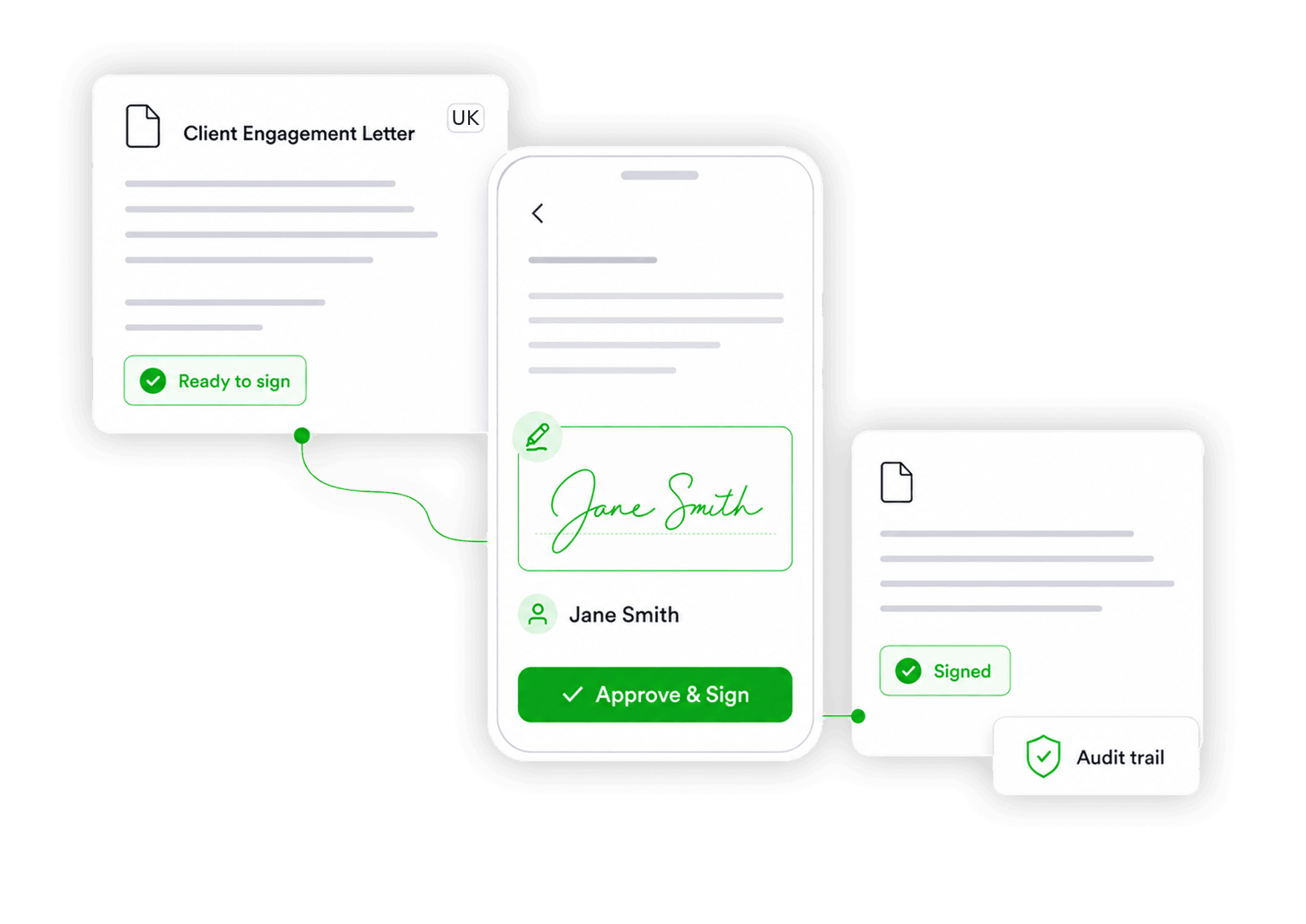
Electronic signature software helps firms replace that manual process with a more structured workflow. Documents can be sent digitally, clients can approve them from anywhere, and the firm can keep a clear record of the signature event.
For busy practices, this can help reduce follow-up, improve turnaround times, and give staff better visibility over outstanding client approvals.
An electronic signature is any electronic method used to indicate approval or agreement.
This could include:
A digital signature generally refers to a more secure form of electronic signature that uses technologies such as encryption or digital certificates to help verify the signer and protect the integrity of the document.
For most UK accounting firms, the important question is not only which term is used, but whether the signature process provides enough evidence for the document or workflow. Some client approvals may only need a simple electronic signature, while higher-risk or regulated workflows may require stronger evidence.
To learn more, read:
Not every UK tax workflow requires a traditional signature.
Some HMRC digital services require the client or agent to approve information before it is submitted. For example, HMRC’s VAT Making Tax Digital developer guidance requires software to show a declaration before a VAT return is sent.
For agent submissions, that declaration confirms the client has received a copy of the VAT return information and approved it as correct and complete to the best of their knowledge.
That is different from a digitally signed document.
An approval can confirm that a client has reviewed and accepted information. A digital signature can go further by creating a stronger evidence trail around the approval, including who signed, when they signed, which document version they approved, and whether the signed document has changed after signature.
For accounting firms, this distinction matters. Whilst some workflows may only technically require approval, a digital signature provides evidence that the client has reviewed and signed the document.
FuseSign helps accounting firms manage client signature workflows with more visibility, structure, and confidence.
Instead of relying on email chains and manually returned PDFs, firms can send documents for electronic signature and keep a clearer record of the approval process.
FuseSign supports stronger signature evidence through features such as:
These features can help firms record who signed, when they signed, how the signature process occurred, and which version of the document was approved.
For UK accounting firms, that can be especially useful across recurring client workflows such as engagement letters, tax documents, compliance forms, onboarding packs, and financial statements.
See why UK businesses trust FuseSign to reduce admin, speed up turnaround and deliver a better client experience.